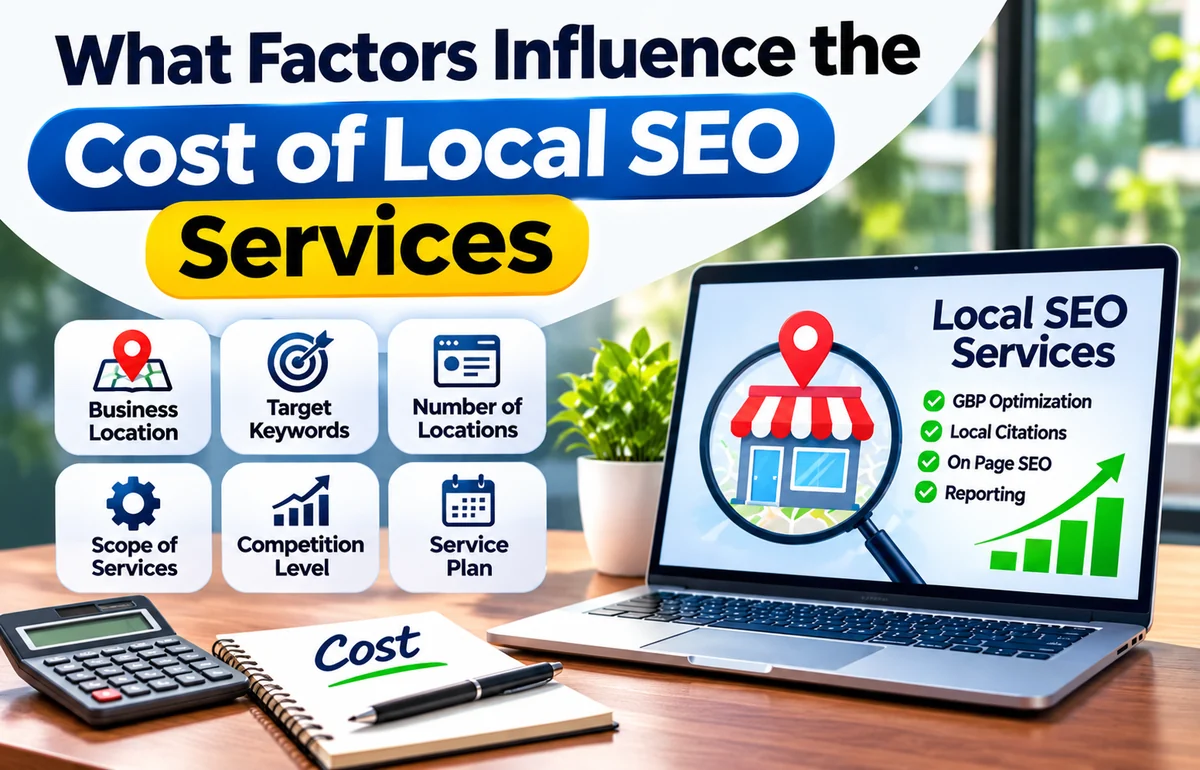
The Short Answer: How Much Do Local SEO Services Actually Cost?
Local SEO services in the USA typically range from $500 to $1,200 per month for single-location low-competition businesses, $1,200 to $3,000+ per month for competitive urban service areas, and $2,000 to $10,000+ for multi-location franchises. The price directly reflects the manual labor, local citation building, technical optimization, and competitive intensity required to rank in Google Maps and local organic search.
Quick Pricing Benchmarks for U.S. Small Businesses
Evaluating small business SEO cost requires understanding what different monthly retainers and project-based fees actually cover in the U.S. local market. Pricing structures scale directly with the scope of work and geographic reach needed to secure top Google Maps ranking cost efficiency.
Here is how standard pricing tiers break down across different business models:
When reviewing these brackets, consider your specific operational needs:
- Single-location storefronts in smaller towns require minimal citation adjustments to maintain visibility.
- Service-area businesses operating in dense metro areas need aggressive local content and regular map optimization.
- Franchises require enterprise-grade tracking across distinct geographic territories.
Why Local SEO Pricing Varies So Wildly
The massive gap between a $300 monthly agency and a $3,000 professional campaign comes down to automated shortcuts versus dedicated human strategy. Shoddy low-cost packages often rely on outdated automated spam directories that trigger Google penalty flags, whereas professional pricing covers bespoke local optimization.
Understanding the difference helps protect your startup from wasted marketing budgets:
- Cheap providers use automated software to blast your business information across thousands of low-quality directory sites.
- Automated directory submissions frequently create inconsistent Name, Address, and Phone data that confuses search engines.
- Professional campaigns rely on manual verification, custom content creation, and meticulous technical auditing.
- Expert oversight ensures your professional local SEO services align strictly with Google quality guidelines and sustainable growth.
Market and Industry Competition: The #1 Cost Driver
The intensity of local search difficulty in your specific market directly dictates how much labor, time, and strategy an SEO campaign requires. Understanding how market saturation shapes expenses helps clarify why quotes vary significantly between different business types.
Low vs. High Competition Niches
Crowded industries and dense urban markets demand aggressive citation velocity and heavier link acquisition because dozens of established competitors fight for the exact same top three Google Maps positions. Surpassing rivals in high-stakes fields requires continuous profile optimization, rigorous local link building, and a high volume of verified reviews to prove authority.
The contrast in marketing requirements becomes clear when comparing different business operating environments:
- Low-Competition Rural Businesses: A localized service provider in a small rural town faces minimal market saturation, requiring only basic Google Business Profile hygiene and steady review growth.
- High-Competition Urban Services: Legal, medical, and home service providers operating in major metropolitan hubs like Miami or Los Angeles face hundreds of aggressive competitors.
- Resource Demands: High-competition niches require continuous backlink acquisition velocity and ongoing technical refinement to outrank entrenched local players.
To visualize this difference, consider a practical mini-scenario in South Florida. A boutique home improvement blog structure operating with general informational content requires minimal localized link velocity because it targets broad informational queries. Conversely, a competitive multi-neighborhood plumbing contractor in South Florida must constantly build hyper-local citations, secure neighborhood-specific links, and optimize individual service-area pages to capture emergency customer calls across multiple zip codes.
Geographic Radius and Population Density
Targeting a single small town involves a limited radius where a few foundational citations and a well-optimized Google Business Profile can secure immediate visibility. In contrast, competing across an entire metropolitan county requires multiple localized landing pages and extensive geographic coverage to capture traffic from neighboring suburbs.
Managing a broader geographic service area introduces unique optimization hurdles:
- Service-Area Expansion: Reaching customers outside your immediate physical address requires dedicated landing pages tailored to each target neighborhood or city.
- Citation Consistency: Ensuring Name, Address, and Phone data remains completely synchronized across regional directories prevents search engine confusion.
- Proximity Weighting: Google heavily weights physical proximity for map results, meaning businesses must work harder with localized content to rank outside their immediate storefront radius.
Number of Business Locations and Service Areas
Managing optimization efforts for a single physical storefront requires a straightforward strategy, whereas expanding to multiple addresses or serving distinct regions multiplies operational overhead. Each distinct zone or branch requires isolated optimization frameworks, directly scaling the resources and budget needed for sustainable local search visibility.
Single-Location Optimization Requirements
Optimizing a single business address or a primary service area focuses on establishing a strong local foundation. This involves claiming and verifying one Google Business Profile, ensuring core directory accuracy, and building localized content that connects your physical storefront directly to nearby customers searching for your services.
A focused single-location campaign typically revolves around a streamlined set of core activities:
- Google Business Profile Foundation: Claiming, verifying, and fully completing a single primary profile with correct categories, operating hours, and service descriptions.
- Core Citation Building: Establishing accurate NAP consistency across major trusted directories like Yelp, YellowPages, and industry-specific platforms.
- Local On-Page Signals: Optimizing the main website’s metadata and service pages to reflect the immediate city or neighborhood where the business operates.
Multi-Location and Franchise Scaling Costs
Managing multiple business locations or expanding across distinct service areas significantly increases SEO costs because each site requires separate Google Business Profile verification, dedicated localized landing pages, and isolated tracking across regional directories to avoid ranking conflicts and duplicate content penalties.
As a service company expands across regions, maintaining data integrity becomes a massive operational hurdle:
- NAP Synchronization Challenges: Keeping Name, Address, and Phone data completely synchronized across 5+ regional directories for an expanding service company requires rigorous manual oversight to prevent customer confusion and ranking drops.
- Independent GBP Management: Each physical address or defined service-area business territory requires its own verified profile, review acquisition strategy, and regular map optimization.
- Localized Landing Pages: Building bespoke, conversion-optimized web pages for every target city or neighborhood prevents keyword cannibalization and targets distinct local search intent effectively.
Scope, Scale, and Core Deliverables (What’s Included?)
Professional local SEO investments are defined by concrete technical actions, continuous content execution, and active review management rather than empty promises. Understanding the exact deliverables helps small business owners evaluate true value and avoid paying for ineffective tactics.
On-Page Optimization, Schema, and Technical Fixes
Professional local campaigns start with a comprehensive technical SEO audit to identify crawl blocks, speed issues, and missing metadata. Implementing structured data like local business schema markup directly helps search engines understand your exact operating hours, physical address, and service categories.
Restructuring meta tags and fixing broken site architecture lays a stable technical foundation for local ranking success. To see how these critical phases are executed, you can explore our comprehensive technical and local SEO services designed for growing businesses.
Core technical tasks typically include:
- Running an in-depth technical SEO audit to uncover indexation errors.
- Adding local business schema markup to code templates.
- Improving page load speeds and mobile usability.
- Restructuring title tags and meta descriptions for target geo-terms.
Ongoing Content Creation and Review Generation Campaigns
Sustained visibility requires consistent content creation and structured review generation campaigns that build consumer trust. Crafting targeted hyper-local service pages and setting up automated review request funnels drive both search engine rankings and direct customer inquiries.
Distinguishing legitimate deliverables from fraudulent offerings protects your marketing budget from wasted spending. Legitimate campaigns focus on valuable assets, while low-quality providers rely on automated shortcuts.
What to look for in campaign deliverables:
- Legitimate Deliverables: Hyper-local service pages, helpful blog content answering local questions, manual citation cleanup, and systematic review request follow-ups.
- Phantom Deliverables to Avoid: Avoid agencies selling “10,000 instant directory submissions” or “guaranteed #1 rankings in 24 hours,” as these rely on automated spam networks that trigger search engine penalties.
Current Website Status and Technical Debt
A website’s current technical condition directly impacts initial local SEO setup costs and timelines. Older sites or those with accumulated technical debt require intensive cleanup work, penalty recovery, and architectural repair before new local optimization strategies can deliver measurable growth in search engine results.
Brand New Sites vs. Legacy Sites with Black-Hat History
Brand new sites offer a clean slate that streamlines the initial setup process, requiring standard domain configuration and baseline optimization. Conversely, legacy sites carrying historical black-hat baggage demand exhaustive audits, spam backlink disavow file creation, and deep structural overhauls to lift hidden penalties before ranking potential can unlock.
Understanding the difference between clean setups and legacy remediation highlights why pricing varies:
- Clean Slate Setup: Brand new domains require foundational setup, including domain authority establishment and basic indexation, without historical penalties.
- Legacy Penalties: Older sites subjected to past spammy tactics or purchased link networks suffer from algorithmic or manual penalties that suppress local visibility.
- Remediation Work: Cleaning up a legacy site involves manual backlink audits, submitting a disavow file to search engines, and restructuring low-quality content.
Fixing Google Search Console Errors and Crawl Issues
Resolving Google Search Console errors and crawl obstacles is an essential prerequisite before launching active local growth campaigns. Hidden indexation bottlenecks block search engine bots from discovering critical service pages, wasting valuable marketing resources until the underlying site architecture is corrected.
Diagnosing historical crawl blockages requires checking specific technical indicators:
- Robots.txt Audits: Checking rule directives to ensure essential folders and local landing pages are not accidentally blocked from search engine crawlers.
- Orphaned Page Discovery: Connecting unlinked pages back into the main site navigation tree so users and bots can easily discover them.
- Coverage Monitoring: Tracking indexation warnings and fixing server errors before running ongoing optimization campaigns.
In practical local SEO work, many legacy sites suffer from quiet technical barriers that completely block organic traffic. A frequent culprit is a misconfigured robots.txt file that accidentally disallows entire folder directories, or forgotten orphaned pages that lack internal links. Diagnosing these structural blockages in Google Search Console requires verifying coverage reports, testing live URLs, and ensuring that core service landing pages are fully accessible to search crawlers before budget is allocated to link building.
Provider Experience, Engagement Models, and Hidden Traps
Selecting the right local SEO partner and engagement model is critical for ensuring your budget delivers real customer inquiries rather than empty promises. Understanding the operational differences between freelancers, agencies, and enterprise firms helps you choose an accountable partner.
Freelancer vs. Boutique Agency vs. Enterprise Firm
Choosing between an independent freelancer, a boutique agency, or a large enterprise firm depends heavily on your business size, budget, and growth objectives. Independent freelancers typically provide lower overhead and direct communication, whereas boutique agencies offer specialized team expertise, and enterprise firms cater to massive multi-location franchise operations.
Evaluating each provider’s engagement model ensures your financial commitment aligns with expected deliverables:
- Independent Freelancers: Ideal for smaller startups seeking personalized attention, flexible project-based consulting, and direct day-to-day communication without agency markup.
- Boutique Agencies: Best suited for growing service businesses that need a structured monthly SEO retainer covering ongoing content creation, technical audits, and citation management.
- Enterprise Firms: Designed for large multi-state corporations requiring massive automated software tracking and dedicated account teams at high premium rates.
Red Flags and Agency Traps to Avoid
Protecting your business from predatory providers means watching out for warning signs like long-term binding contracts, hidden fees, and agencies promising instant #1 rankings within a week. Legitimate local SEO providers focus on transparent reporting and sustainable growth rather than locking clients into inflexible agreements that lack accountability.
To avoid common agency traps discussed by business owners online, watch for these specific warning signs:
- Guaranteed Instant Rankings: Any provider promising a top Google spot in seven days is likely using automated black-hat tactics that risk search engine penalties.
- Locked-In Long-Term Contracts: Beware of agencies demanding 12-month lock-ins with heavy cancellation penalties while offering vague performance reports.
- Opaque Reporting: Avoid firms that hide their work behind vanity keyword metrics instead of showing actual phone calls, form fills, and map directions.
When vetting a potential local SEO partner, skip the sales pitch and ask for verifiable case metrics, such as historical lead growth or map visibility improvements from past clients in competitive markets. You can review how transparent, localized execution works across different regions by exploring our service location landing pages.
Frequently Asked Questions
Is local SEO a one-time fee or a monthly retainer?
Local SEO requires ongoing maintenance, regular Google Business Profile updates, review acquisition, and continuous local citation monitoring. While initial audits or single setup tasks can be one-time projects ($750–$5,000), sustainable ranking growth in competitive U.S. markets requires an ongoing monthly retainer.
Understanding how pricing structures work helps business owners plan their marketing budgets effectively across different operational phases:
- One-Time Projects: Ideal for foundational technical audits, initial Google Business Profile cleanup, and comprehensive setup packages.
- Monthly Retainers: Required for ongoing map optimization, content expansion, continuous review acquisition, and active competitor tracking.
- Sustained Effort: Search engine algorithms and local competitors change constantly, making consistent monthly oversight necessary to hold top rankings.
How long does it take to see ROI from local SEO investment?
Local SEO is a compounding long-term marketing strategy that typically takes three to six months to deliver measurable lead generation improvements and positive return on investment. Search engines require time to crawl, index, and trust newly optimized local signals.
The timeline unfolds across distinct operational milestones as your local presence strengthens:
- Months 1 to 2: Focuses on technical fixes, resolving Google Search Console errors, optimizing Google Business Profile data, and correcting citation inconsistencies.
- Months 3 to 6: Involves content accumulation, review velocity building, and local map rankings climbing into the top three pack for target keywords.
- Long-Term Compounding: Once established, steady local visibility generates consistent organic phone calls and customer inquiries without paying for every click.
Can I do local SEO myself to save money?
Bootstrapped startup founders can handle basic local SEO tasks independently using free tools, but outsourcing becomes necessary when time constraints and technical complexity outweigh DIY savings. Weighing founder time investment against professional execution is a critical operational decision.
Evaluating whether to manage optimization internally or hire an expert depends on available resources:
- DIY Feasibility: Founders can easily claim their Google Business Profile, ask happy customers for reviews, and fill out core directory listings manually.
- When DIY Fails: Advanced technical tasks like schema markup implementation, backlink audits, and programmatic local page creation require specialized SEO expertise.
- Opportunity Cost: Spending hours each week trying to troubleshoot indexation bugs often pulls founders away from core business operations and direct revenue generation.