Introduction to Off-Page SEO & Local Citations for US Small Businesses
What Is Off-Page SEO for Local Businesses?
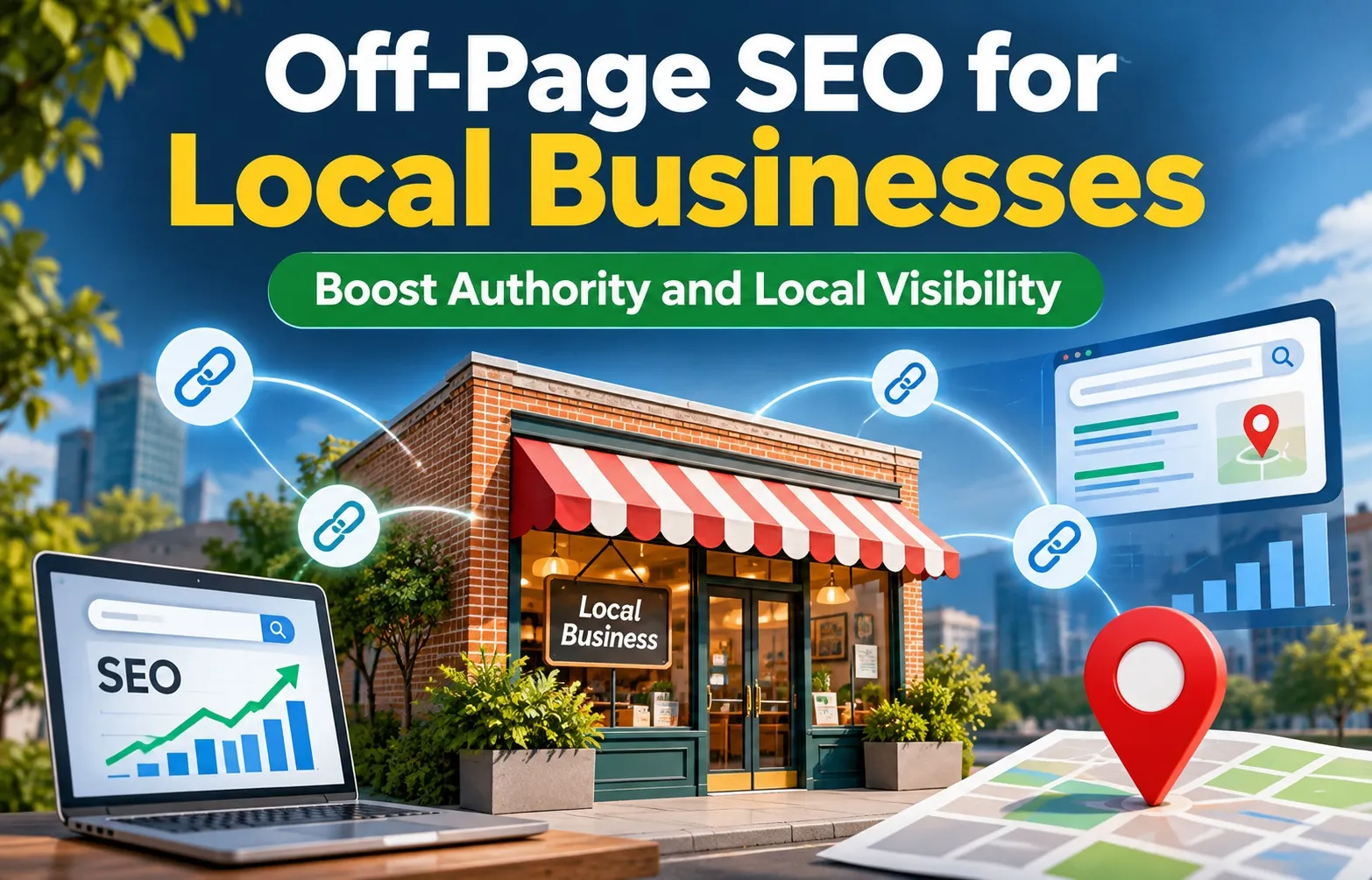
Off-page SEO refers to actions taken outside your website—such as securing external backlinks, building local citations, and earning online reviews—that signal authority and trust to search engines. For small businesses across the United States, these external signals dictate whether your storefront or service area appears when local customers search online.
Many business owners pour all their energy into on-page tweaks like keyword optimization and faster page loading speeds. However, search engines evaluate your digital footprint far beyond your own domain boundaries to determine who deserves top local rankings.
Key components that shape your external search presence include:
- Backlinks: External links pointing to your site that act as digital votes of confidence.
- Local Citations: Online mentions of your business name, address, and phone number.
- Review Signals: Customer feedback and star ratings hosted on independent platforms.
- Brand Mentions: Direct references to your business across the web even without a hyperlink.
The Local Citation Connection
Local citations act as foundational digital trust badges by verifying your business’s physical existence and operational details across trusted directories. When search engines cross-reference your business records across multiple platforms, consistent data builds the confidence needed to elevate your local search visibility.
Consider a practical scenario involving a newly established plumbing contractor operating in a competitive Florida suburb. Despite having zero high-authority backlinks compared to established legacy competitors, this business can achieve top placement in the Google Local Pack purely through meticulous citation hygiene and NAP consistency.
When you align your business records properly, search algorithms experience zero ambiguity regarding your service area and contact credentials. This clarity allows emerging businesses to establish immediate trust signals without waiting for lengthy link-building cycles.
To establish this foundational trust correctly, business owners should focus on several practical priorities:
- Auditing existing directory listings for outdated phone numbers or mismatched suite numbers.
- Ensuring your business name matches your legal registration and Google Business Profile identically.
- Leveraging structured data alongside directory listings to reinforce location accuracy.
- Partnering with experienced teams offering professional local SEO services to manage complex data syndication networks.
The 5 Pillars of Local Off-Page SEO Beyond Traditional Backlinks
Many business owners mistakenly believe that off-page SEO begins and ends with expensive guest posting campaigns. For local businesses and startups targeting specific geographic areas, off-page optimization encompasses five distinct pillars that directly influence map visibility and local search rankings.
1. Traditional Backlinks
High-quality contextual backlinks from relevant industry or regional websites signal domain authority to search engines. For a local business, earning links from local event sponsors, regional newspapers, or community organizations carries far more geographic relevance than generic national links.
Effective local link acquisition strategies include:
- Sponsoring local community events or charity drives with an official website credit.
- Contributing expert commentary or quotes to regional news outlets and lifestyle blogs.
- Partnering with non-competing local businesses for joint community outreach initiatives.
2. Local Citations & Directory Mentions
Local citations are online mentions of your business name, address, and phone number across structured directories and web platforms. These references act as vital geographic validation points that prove your business operates legitimately within a specific target market.
Key actions for managing directory mentions include:
- Ensuring exact NAP formatting matches across all platform profiles and social channels.
- Submitting core business details to primary data aggregators that feed hundreds of smaller local directories.
- Claiming profiles on major consumer platforms like Yelp, Apple Maps, and the Better Business Bureau.
3. Google Business Profile (GBP) Signals & Proximity
Google Business Profile signals, including engagement history, photo updates, and category completeness, rely heavily on external web activity to validate local prominence. External mentions across the web reinforce the authority of your map listing, helping you rank for searches outside your immediate physical coordinates.
Ways off-page signals boost your profile include:
- Correlating directory citations with your exact GBP address and phone number to eliminate algorithmic doubt.
- Amplifying local engagement through community mentions that drive direct map queries.
- Feeding search crawlers consistent signals that match your website metadata and profile data.
4. Customer Reviews & Sentiment Analysis
Customer reviews and ongoing review velocity across Google, Yelp, and industry-specific platforms serve as powerful consumer trust signals. Search algorithms evaluate not just your average star rating, but how frequently new reviews arrive and the specific keywords customers use in their feedback.
Review optimization fundamentals involve:
- Establishing a systematic process to request feedback immediately after completing a local service call.
- Monitoring review sentiment and responding professionally to both positive and negative comments.
- Encouraging customers to naturally mention specific services or local neighborhoods in their reviews.
For new US startups operating on tight marketing budgets, review velocity and local directory citations carry more immediate local weight and return on investment than expensive national guest posts. Building a steady stream of local reviews creates an immediate competitive edge in map pack results.
5. Brand Mentions & Unlinked References
Brand mentions occur when your business name is referenced across news sites, social media, or blogs without a direct hyperlink attached. Modern search engines possess sophisticated natural language processing capabilities that recognize unlinked brand citations as legitimate entities.
Search engines interpret these references by:
- Analyzing the context and sentiment surrounding your business name across the broader web.
- Cross-referencing brand mentions with your physical address and contact details to verify real-world market presence.
- Treating unlinked citations as secondary authority markers that support your overall local prominence.
What Are Local Citations and Why Do They Dictate Local Pack Rankings?
What Does a Local Citation Mean for Your Business?
A local citation is any online mention of your business name, address, and phone number, commonly referred to as NAP. These directory listings and platform mentions serve as core trust signals that prove your business’s physical existence and legitimacy to search engine algorithms.
When you operate a local business or startup, search engines need definitive proof that you are located where you claim to be. Directory listings spread across the web validate your operational footprint and give search crawlers the confidence needed to display your profile to nearby customers.
Key components that make up a strong citation foundation include:
- Exact NAP Matching: Uniform business name, physical street address, and local phone number formatting across every platform.
- Industry Relevance: Citations hosted on trade-specific directories that match your exact commercial niche.
- Geographic Authority: Platform references tied tightly to your target city, state, and zip code.
How Search Engines Cross-Reference NAP Data
Search engines do not manually browse every small website or directory to collect business details. Instead, they rely heavily on Tier 1 Data Aggregators like Data Axle, Neustar Localeze, and Foursquare to feed core business intelligence into regional search indices.
These primary data aggregators collect, verify, and syndicate business records outward to hundreds of downstream directory listings, navigation apps, and search engines. If your core data is harmonized at the aggregator level, Google algorithms experience high search engine trust and readily promote your map profile.
Consider a practical scenario involving an HVAC repair contractor whose phone number changed by a single digit in an old online yellow pages directory from years prior. Because data aggregators and local directories conflicted, Google’s automated verification filters could not confirm the true business contact info, causing the profile to drop out of the local 3-pack entirely until the legacy record was corrected.
To ensure your data syncs correctly and maintains absolute NAP consistency:
- Audit your business presence across primary data aggregators to catch legacy phone numbers or old office addresses.
- Correct discrepancies at the source level rather than just updating consumer-facing front-end directories.
- Regularly monitor search engine visibility to spot sudden local ranking shifts caused by background data mismatches.
The Step-by-Step NAP Audit & Cleanup Framework
Conducting a thorough citation audit ensures search engines accurately verify your business details without encountering conflicting data across the web. Following a structured cleanup framework helps you eliminate errors methodically.
Step 1: Discovering Existing Citations and Duplicate Listings
Discovering existing citations and duplicate listings requires running targeted search queries and utilizing online audit tools to map every digital mention of your business across the web. Uncovering these records lets you identify unauthorized or outdated profiles dragging down your local search visibility.
You can execute a quick manual search on your second screen right now using specific search operators:
- Type your exact business name and city in quotation marks into search engines, such as
"Apex Plumbing" "Miami", to locate unverified directory mentions. - Search your primary business phone number with quotation marks to track down old listings tied to past office locations.
- Scan popular local platforms and review sites manually to catch duplicate pages created by automated web scrapers.
Step 2: Reconciling Name, Suite, and Phone Discrepancies
Reconciling name, suite, and phone discrepancies involves standardizing your core business identifiers so every online profile matches your official legal registration and Google Business Profile down to the exact character. Even minor variations can trigger filtering algorithms that suppress your local map rankings.
Follow this practical checklist to harmonize your records across all platforms:
- Business Name: Keep your legal business name consistent without adding unverified keyword stuffers that violate platform guidelines.
- Address Formatting: Standardize abbreviations completely—choose either “Street” or “St.” and stick to it everywhere, making sure suite or unit numbers are written identically.
- Phone Number: Use your primary local phone number consistently across all listings rather than switching between various toll-free or tracking lines on core directories.
Step 3: Correcting Data Aggregator Disconnects
Correcting data aggregator disconnects involves submitting updated business records directly to primary data syndication networks so downstream directories automatically refresh their cached information. Fixing issues at the aggregator source prevents old address data from reappearing later in local search results.
Take these actionable steps to manage your aggregator network effectively:
- Identify which primary data aggregators currently hold outdated records for your business entity.
- Claim and verify your business profile directly on major aggregator dashboards to lock in correct data.
- Monitor downstream directory sync status over a sixty to ninety-day window to ensure updates propagate fully.
The Ultimate US Citation Tier List: Where to List Your Business First
Prioritizing the right web directories ensures your marketing energy targets platforms that genuinely influence local map rankings. Establishing a strategic hierarchy prevents wasted effort on low-value sites and protects your business brand.
Tier 1: Core Data Aggregators & Search Engines
Tier 1 platforms include essential search engines, mapping apps, and primary data aggregators like Apple Maps, Bing Places, and Yelp. Claiming and verifying these core profiles first establishes the immediate foundation of your local presence and feeds correct data across the broader web.
Focus your initial setup on these essential destinations:
- Apple Maps: Vital for capturing mobile users and voice search requests across iOS devices.
- Bing Places: Captures unique desktop and mobile search traffic across Microsoft networks.
- Yelp: Serves as a major consumer review hub that search algorithms heavily evaluate.
Tier 2: High-Authority General Directories
Tier 2 encompasses high-authority general directories and business registries like the Better Business Bureau (BBB), Yellow Pages, Chamber of Commerce pages, and social business pages. These trusted hubs validate your brand legitimacy and provide broad geographic authority.
Key directories in this tier include:
- Better Business Bureau (BBB): Enhances consumer trust and signals formal corporate credibility.
- Chamber of Commerce: Establishes hyper-local relevance within your specific city or county.
- Established Yellow Pages: Maintains historical web presence recognized by search engine crawlers.
Tier 3: Industry & Geo-Specific Directories
Tier 3 focuses on niche and geo-specific directories, such as Angi for home services or Avvo for legal professionals. These targeted platforms significantly outperform generic listings because they connect you directly with high-intent buyers searching within your exact trade.
Maximizing niche directory value involves:
- Identifying trade-specific registries where your direct competitors already maintain active profiles.
- Targeting regional business directories specific to your state or commercial district.
- Leveraging professional association member directories to build authoritative industry links.
Understanding the difference between high-quality citations and spammy directory submission practices protects your website from algorithmic penalties. Review the comparison below to evaluate citation quality:
Managing this multi-tiered ecosystem requires consistent time and technical oversight. For businesses seeking structured execution without administrative friction, professional support through tailored local SEO services and citation campaigns can streamline the entire process.
Overcoming Common Local Citation Pitfalls & Reddit/Quora Objections
Myth vs. Reality: Are Directory Submissions Still Effective?
Directory submissions are far from dead, but automated mass-submission software that blasts your business data to thousands of low-quality sites will trigger an algorithmic spam penalty. Modern local SEO relies on manual citations and hand-curated listings on trusted platforms to help the local search algorithm verify your business.
Many business owners reading community forums like Reddit or Quora wonder if directory listings are just outdated marketing myths. The confusion stems from old software tools that flooded the web with low-grade automated links years ago.
Search algorithms now easily filter out automated link farms while continuing to value genuine business registries. Key differences between risky automation and proper citation practices include:
- Automated Software: Blasts unverified NAP details to hundreds of unmoderated directories overnight, risking severe algorithmic penalties.
- Manual Citations: Carefully builds verified business profiles on authoritative regional and industry platforms to build search trust safely.
How Long Does It Take for Local Citations to Move Rankings?
Local citation cleanups and new directory submissions typically take between sixty to ninety days to show noticeable movement in map positions. Search engine crawlers require this realistic ranking timeline to discover, re-crawl, and verify updated NAP data across primary aggregators before shifting local pack results.
Business owners frequently feel discouraged when fixing incorrect addresses or phone numbers does not instantly push their profile to the top spot. Real-world data propagation moves at a measured technological pace.
Knowing what to expect during this optimization window prevents premature panic and keeps your strategy on track:
- Days 1 through 30: Submitting updates, claiming directory profiles, and pushing correct records upstream to data aggregators.
- Days 31 through 60: Search bots and downstream directory partners recrawl the web to match records against your main business profile.
- Days 61 through 90: Algorithmic trust solidifies, resulting in stabilized map coordinates and improved local search visibility.
Scaling Local Search Visibility & Next Steps
When to Handle Citations In-House vs. Outsourcing
Deciding whether to handle local citations in-house or partner with an expert depends entirely on your team’s available bandwidth and technical proficiency. While DIY execution saves immediate cash, outsourcing frees up valuable business hours to focus on core client operations. Evaluating time cost versus efficiency helps growing businesses avoid administrative bottlenecks.
When founders spend hours hunting down duplicate directory logins, customer service suffers. Key factors to weigh before choosing your execution path include:
- Internal Bandwidth: Assess whether your team has dedicated hours weekly to monitor data syncs across dozens of directories.
- Technical Familiarity: Consider your comfort level with resolving complex NAP discrepancies across primary data aggregators.
- Growth Speed: Determine if fast-tracking map rankings is critical for immediate startup revenue generation.
Building a Sustainable Local SEO Growth Engine
Building a sustainable local search engine optimization engine requires aligning your local citations directly with ongoing landing page optimization and review acquisition. Consistency across all digital touchpoints ensures long-term ranking stability. Small business SEO is not a one-time project; it is an ongoing operational commitment.
When your directory profiles, website landing pages, and Google Business Profile work in harmony, search engines reward your business with sustained local map visibility. To explore regional strategies, review our targeted local SEO campaigns across the USA. Core habits for maintaining your local growth engine include:
- Scheduling quarterly citation audits to catch accidental data changes or new duplicate listings.
- Maintaining an active review collection cadence across your primary industry platforms.
- Updating your website service pages to reflect changing geographic target areas as your business expands.
Frequently Asked Questions
Why does off-page SEO matter for small businesses?
Off-page SEO matters for small businesses because search engines rely on external signals—such as local citations, customer reviews, and brand mentions—to verify your legitimacy and decide whether to rank your business in competitive local map packs. Building an external digital footprint proves that real people and trusted platforms recognize your business, helping you outrank competitors who only optimize their on-page content.
Without external validation, search algorithms struggle to confirm whether an emerging business is actively serving its local market. Establishing a strong off-page presence offers several core advantages:
- Establishes real-world operational credibility with automated search algorithms.
- Drives direct referral traffic from high-authority consumer directories and review sites.
- Amplifies local map visibility without relying entirely on paid advertising budgets.
What is the difference between general SEO and local SEO?
General SEO focuses on improving organic search visibility nationwide or globally for broader informational keywords, whereas local SEO specifically targets geographic proximity signals to rank your business in front of nearby customers using Google Maps and local pack results. While a national e-commerce site cares about worldwide traffic, a local service provider needs to capture high-intent buyers searching within a specific city or service radius.
Understanding this distinction helps business owners allocate their marketing energy toward strategies that deliver immediate regional returns:
- General SEO targets broad keyword volume, content depth, and national backlink acquisition.
- Local SEO prioritizes Google Business Profile optimization, local citations, and strict NAP consistency.
- Local search results factor in user proximity, map packs, and physical service area boundaries.
How do you build citations for local SEO without getting penalized?
You build citations safely for local SEO by manually creating or updating verified business profiles on trusted, moderated platforms rather than using automated software to blast spammy directories with inconsistent NAP details. Quality always trumps quantity when handling local citations, and focusing on authoritative industry directories keeps your digital footprint secure.
Protecting your website from algorithmic spam filters requires disciplined execution habits:
- Stick exclusively to hand-curated listings on reputable consumer registries and trade platforms.
- Avoid automated submission tools that blast your business details to thousands of unmoderated sites overnight.
- Keep your business name, physical address, and phone number one hundred percent consistent across every entry.
What does local citation mean for a service-area business?
For a service-area business that travels to customers instead of operating a storefront, a local citation represents any online mention of your business name, phone number, and operating territory across directories, even when your physical street address is hidden from public view. Service-area businesses must handle location data carefully to comply with search engine guidelines while still proving their regional coverage.
Managing citations correctly as a mobile professional involves several distinct practices:
- Allows businesses without a public customer-facing storefront to establish valid local search trust.
- Requires proper configuration of hidden address settings on major mapping and directory platforms.
- Validates regional phone numbers and service zones across trusted industry registries.